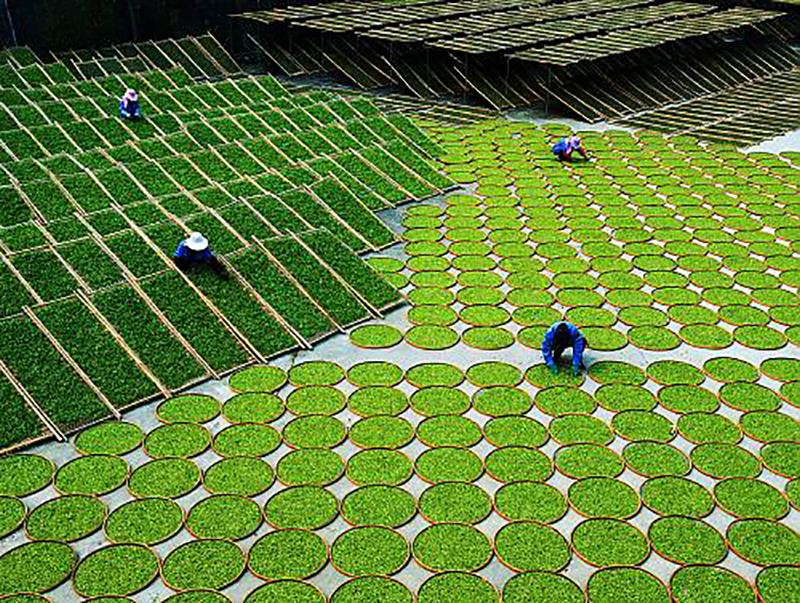
中国传统的茶叶加工技术和相关的社会实践需要围绕茶园管理、茶叶采摘、手工加工、饮用和分享的知识、技能和实践。根据自然条件和当地习俗,茶叶生产商开发了六类茶叶:绿茶、黄茶、黑茶、白茶、乌龙茶和红茶。当添加到再加工茶中时,如花茶,其结果是2000多种颜色、香气、风味和形状各异的茶产品。茶在中国人的日常生活中无处不在,在家里、工作场所、茶馆、餐馆和寺庙都有浸泡或煮沸的茶。它是社会化和婚礼、祭祀等仪式的重要组成部分。通过与茶有关的活动问候客人并在家庭内部和邻居之间建立关系的做法在多个民族中很常见,为社区提供了一种共同的身份感和连续性。知识、技能和传统通过家庭和学徒传承,传承者包括茶叶生产商、农民和艺术家,以及制作通常与茶一起食用的糕点的人。
2022年列入人类非物质文化遗产代表作名录。
China’s traditional tea processing techniques and associated social practices entail the knowledge, skills and practices around tea plantation management, tea-leaf picking, manual processing, drinking and sharing. Based on natural conditions and local customs, tea producers have developed six categories of tea: green, yellow, dark, white, oolong and black teas. When added to reprocessed teas, such as flower-scented teas, the result is over 2,000 tea products with a variety of colours, aromas, flavours and shapes. Tea is ubiquitous in the Chinese people’s daily life and is served steeped or boiled in homes, workplaces, tea houses, restaurants and temples. It is an important part of socialization and of ceremonies such as weddings and sacrifices. The practice of greeting guests and building relationships within families and among neighbours through tea-related activities is common to multiple ethnic groups, providing a sense of shared identity and continuity for the communities. The knowledge, skills and traditions are passed on through families and apprenticeships, and the bearers include tea producers, farmers and artists, as well as those who make the pastries that are typically served with tea.
Inscribed in 2022 on the Representative List of the Intangible Cultural Heritage of Humanity